KitBuilders Inter-Mag Issue #64
Selected Pages
This site has been restored and archived for use as supplemental reading for Dan Stahl's course, Cyber Media. Dan has been the recipient of many awards for his work on a number of stop action films using 3d models. He applied for and received a grant from the Web Archive Project to recreate this website as a document of historic significance. Bob Sakayama's team at TNG/Earthling provided development and research support, and Lea Anders handled graphics and edited content taken mainly from Issue 64. Students can download the entire syllabus and reading list from the Art Department web area.
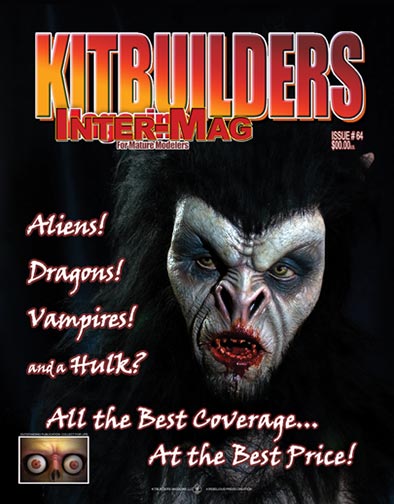 |
ISSUE 64
Editorial / KB "HotShot" |

Before we start on the editorial for this issue I feel I have to explain something. For the individuals who are not fans of KB or not fans of Barbara or myself please do us and the whole modeling community a favor and simply press the red “X" in the box in the upper right hand corner. I would rather you know nothing about something you do not care about than have to subject the other hobbyists from hearing your never ending complaints. What we do is very simple, but you would think we were attempting to pollute the environment with airborne toxins given some of the inappropriate & nasty criticisms we've received including insulting comments associating us with medical waste. We are not forcing everyone into accepting our claim to be the best medical disposal service- where biohazardous material can be handled and processed in your lap. Nothing involving waste management is involved, just great art by dedicated artists, so please look at our efforts in this light! We're here for the fun of it, and to share our hobby with other interested parties.
This magazine is launched for the simple idea of support for this hobby. In fact this hobby needs as much support as it can get these days since the hobby has allowed the few to drive the pleasure of the many. We have re-created the look and feel of the Kitbuilders Magazine into the new Kitbuilders Inter-Mag for mature modelers. It was not a decision that came lightly but one has to be able to create a magazine that is financially capable of sustaining itself. We never intended for this magazine to make money but we have no intention of financially supporting it neither.
Could we have continued a printed format? Sure, it was just going to cost a lot more and as the printed word slides into the past, printers have become more expensive to cover their bottom line. To tell you the truth I was never really quite happy with the way the magazine turned out in the final production. From over saturated pages to color corrections that were not approved by us, it really turned out to be a nightmare, and an expensive one at that. If you need an example of that just head to page 78 for the Swamp Fight and you’ll see how I intended it all to look.
The time and effort that goes into creating a single issue is mind bending. So consider this our contribution to the hobby. It is intended for everyone to read and enjoy and now can be viewed world wide for free. We’ll be creating articles the same way as we have in the past but you will notice that the print, pictures, and layouts are simply more intensive and easier to navigate. Let's be honest, we are getting older as a whole and this hobby is drawing the younger crowds as it should, maybe this will help. We'll be linking to Facebook and others and will work with companies for aps for newer devises which in the end makes it all the easier for people anywhere to get a copy. Did I forget to mention we no longer have to deal with the Post Office and their bimonthly price increases.
Now let me explain how this will work so the rumour buddies will not have to spend so much time getting it *wrong. Kitbuilders Inter-Mag is now FREE for anyone who has internet access. This means all you have to do is go to the site and simply look it up and enjoy. If you want to print an article for your use while painting a model kit, go ahead. If you want to print the whole magazine. knock yourself out. I just don’t think I need to get back on the mouse wheel for we have discovered there is no cheese at the end of the ride. This issue is launched in it’s entirety but future issues will be launched an article at a time. This issue will remain up on the site for 60-90 days at which time I will be working the next cover. Once that cover is completed and placed on the web-site the old issue will be pulled down. As articles are completed they will be placed up in which ever order Barbara and I see fit. Once all the pages are completed the Inter-Mag will be left up for another 60-90 days until the cycle starts all over again. Should you be incapable of saving yourself a copy dur- ring this time frame we will be producing a DVD that can be viewed on any DVD playing device. There will be no further subscriptions as modern people are what I consider the “fast food nation". They want it fast, cheap, and everything delicious and sometimes it just doesn’t work out that way. Let's face it, not every article is a Georgia Peach. Now you can pick and choose what you like.
I am not sure where this hobby is headed but I can tell you the buisness is equal to Solyndra. The Hobby can never die as you are asking people to give up what they enjoy, that’s not going to happen. There are some really imaginative kits coming out these days but it seems the prices are starting to rival the pre-paint market. You can take a lesson from Jimmy Flintstone, he sells tons of resin to needy builders at a fair price and everyone always goes home with a smile.
One thing I think that is facing this nation and all of us as a whole is the fact that people believe in nothing. Times are hard out there, we see it everyday. This hobby has always been something we could believe in but lately the dark clouds have moved in in seach of a quick buck. Time tells us they don't stay long, you just have to believe at least in yourselves and the fun this used to be. Theres a place for everyone who truly wants to contribute and Barb and myself have decided to give back as we intended from the beggining.
I’ve looked hard at this hobby, took a break and found the best way to support MY hobby without living off of it like a parasite. We’ve been here for you and now we can always be here as long as your out therelUntil next time...
“It’s your hobby....keep it fun!"

From Wikipedia, the free encyclopedia
A garage kit or resin kit is an assembly scale model kit most commonly cast in polyurethane resin. They are often figures portraying humans or other living creatures. In Japan they are usually female anime characters, and in the US movie monsters. But kits are produced of a wide range of subjects, from characters from horror, science fiction, fantasy films, television and comic books to nudes and pin-up girls to dinosaurs to original works of art, as well as upgrade and conversion kits for existing models and airsoft guns.
Originally garage kits were amateur-produced and the term originated with dedicated hobbyists using their garages as workshops. Unable to find model kits of subjects they wanted on the market, they began producing kits of their own. As the market expanded professional companies began making similar kits. Sometimes a distinction is made between true garage kits, made by amateurs, and resin kits, manufactured professionally by companies.
Because of the labor intensive casting process, garage kits are usually produced in limited numbers and are more expensive than injection-molded plastic kits. The parts are glued together using cyanoacrylate (Super Glue) or an epoxy cement and the completed figure is painted. Some figures are sold completed, but most commonly they are sold in parts for the buyer to assemble and finish.
The legality of amateur garage kits can be questionable as they are not always properly licensed and sometimes recast copies of kits are sold without permission
PAGES FROM ISSSUE 64
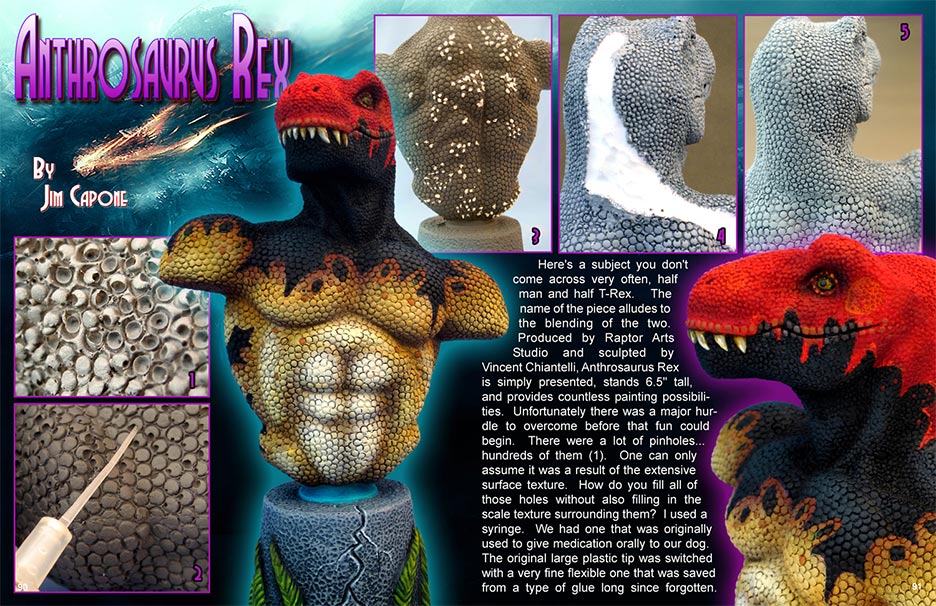
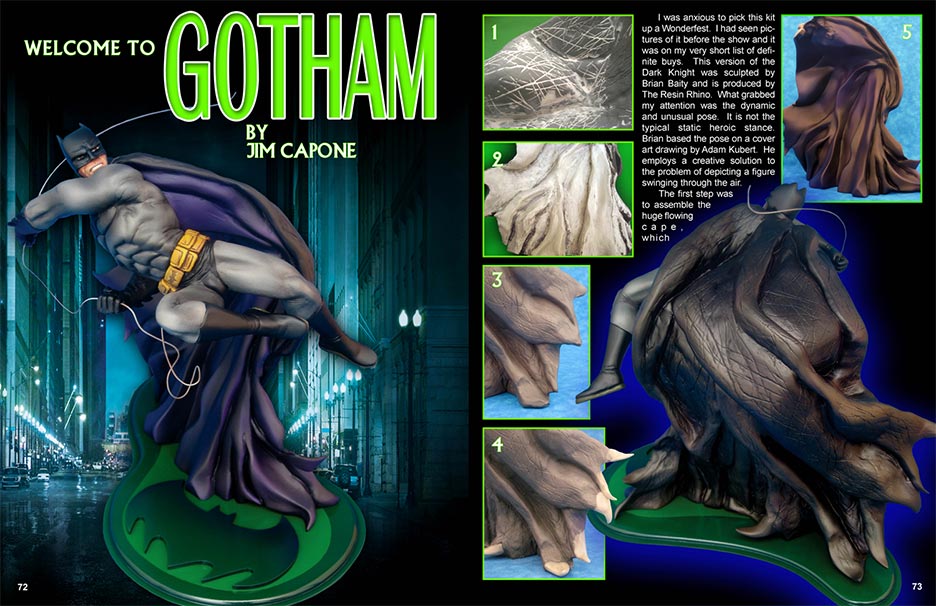
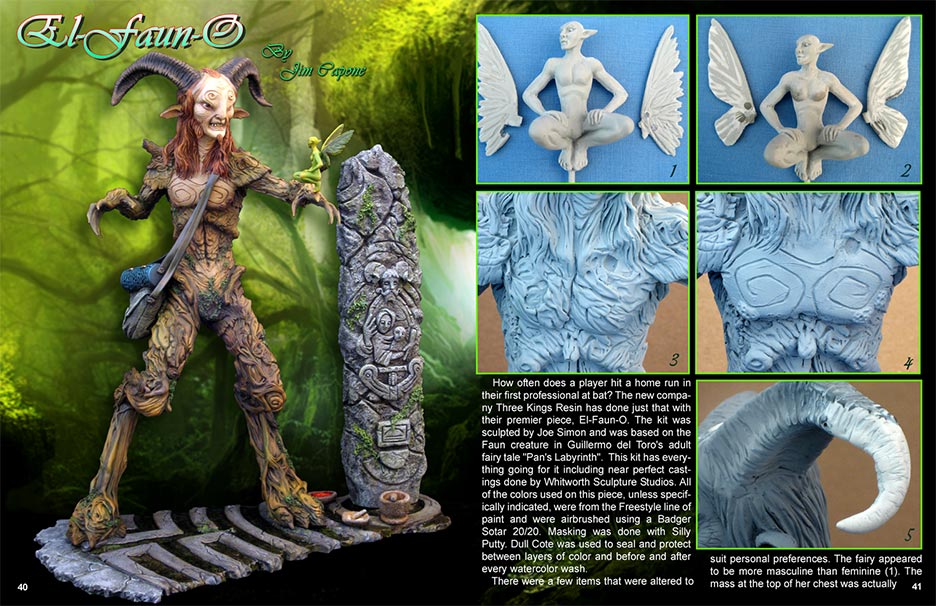

More Background on KitBuildersMagazine.com
KitBuildersMagazine.com preserves a fascinating piece of model-building history: KitBuilders Magazine, a long-running American publication devoted primarily to figure kits, garage kits, resin models, sculpting, painting, dioramas, and the artists and collectors who formed a highly specialized hobby community around them.
For readers unfamiliar with garage kits, the subject can initially seem obscure. These are generally limited-production model kits, often cast in polyurethane resin and sold unassembled and unpainted. Unlike mass-market plastic airplane, automobile, or military kits, garage kits frequently depict characters from horror movies, science fiction, fantasy, comics, anime, classic monster films, and other areas of popular culture. Producing and finishing them can involve substantial sculpting, assembly, modification, painting, and display work.
KitBuilders was created for precisely this kind of enthusiast.
The magazine began publishing in 1991 and survived through major changes in both the model-kit business and magazine publishing. What started as a traditional printed hobby magazine eventually evolved into the online KitBuilders Inter-Mag. Today, KitBuildersMagazine.com functions primarily as a historical presentation of that publication and its community rather than as a continuously updated contemporary hobby magazine.
Its significance therefore goes beyond the individual models featured on its pages. KitBuilders documents an era when garage-kit makers, sculptors, painters, collectors, specialty dealers, conventions, newsletters, magazines, and early websites created a distinctive subculture around models that mainstream manufacturers often ignored.
Origins of KitBuilders Magazine
Commercial and collector records trace KitBuilders Magazine back to December 1991, when Issue #1 was published by Gordy's. Issue #2 appeared in March 1992 and Issue #3 in June, indicating that the publication initially followed roughly a quarterly schedule.
Early issues already demonstrated the eclectic character that would define KitBuilders.
Issue #2 included Rat Fink, super-deformed figures, building and painting techniques, and a feature called "Resin from the Grave." Issue #3 included an interview with Lunar Models, information about taking dioramas to greater extremes, customizing techniques for effects such as ripped flesh and dripping fluids, and military miniatures. Issue #4 featured an interview with collector and film historian Bob Burns as well as regular departments devoted to new products and collecting.
This mixture is important to understanding the magazine. KitBuilders was never simply a catalog of model kits. It operated simultaneously as a how-to publication, product guide, enthusiast newsletter, artist showcase, collector resource, convention report, and chronicle of the garage-kit industry.
By the late 1990s and early 2000s, it had accumulated dozens of issues and a recognizable editorial identity. Issue #34, published in April 2000, described KitBuilders as having covered the figure-modeling hobby since 1991.
The Garage Kit Movement KitBuilders Documented
KitBuilders appeared during an especially interesting period in model-building history.
Garage kits developed because hobbyists wanted subjects that large plastic-model manufacturers were unlikely to produce. Small creators could sculpt a figure, make molds, cast a comparatively small number of resin copies, and sell them directly to collectors. Production runs might number only in the dozens or hundreds rather than the thousands associated with conventional injection-molded plastic kits.
That economics encouraged extraordinary variety.
Horror monsters were particularly important in the American scene, but garage kits expanded into science fiction, fantasy, superheroes, comic-book characters, dinosaurs, movie personalities, anime, pinups, original creatures, and obscure characters that might never have justified a conventional mass-market release.
During the late 1980s and 1990s, the hobby grew considerably. Kits circulated through mail order, conventions, specialty hobby stores, comic shops, advertisements in enthusiast publications, and personal contacts between sculptors and collectors.
KitBuilders became one of the media institutions serving that community. Historical summaries of the garage-kit field identify it alongside Amazing Figure Modeler as one of the principal American magazines devoted to this specialized form of figure modeling during the late 2000s.
What Readers Found Inside KitBuilders
The magazine's recurring departments reveal how comprehensively it approached the hobby.
Among its regular features were "In My Opinion," devoted to kits and product reviews; "Outer Letters," presenting reader correspondence; "Xacto-Facto," covering diorama-building techniques; "Cool New Stuff," introducing new kits and products; "Some Assembly Required," offering building techniques; "Figurin' It Out," dealing with sculpting; "California Connection," connecting Hollywood and entertainment news with subjects of interest to modelers; "Hobby History"; and "The Morgue," which included classified advertising.
These departments created something close to a complete ecosystem for the serious figure builder.
A reader could learn that a new resin kit existed, read an assessment of it, discover techniques for assembling or painting it, learn about the sculptor who created it, find suppliers or related products, read reports from conventions where similar kits were displayed, and communicate with other enthusiasts.
Individual issues often adopted themes.
Issue #30 in 1999 was billed as a "Gore Issue." Issue #31 concentrated on model kits inspired by Hammer films. Issue #33 included a Godzilla project in which John Tucky built and painted a figure and then photographed it against downtown Los Angeles using forced perspective. That same issue documented Wayne Hansen completing sculptor Rick Wyatt's unfinished "Revenge of the Creature" after Wyatt's death.
Issue #38 in 2001 featured Planet of the Apes models, a KitBuilders modeling contest, Japanese anime kits, sculpting, hobby history, show coverage, kit-bashing, and instructional material.
Other issues explored Godzilla, classic monsters, Halloween subjects, British kits, Gothic kits, science-fiction figures, anime, dinosaurs, and other corners of genre culture.
Artists, Sculptors and Practical Instruction
One of KitBuilders' most valuable roles was connecting readers with skilled practitioners.
Rather than treating a finished figure merely as a collectible object, the magazine emphasized the process that produced it. Sculptors and painters explained their methods, and builders could study techniques involving skin tones, stone effects, airbrushing, assembly, sculpting, kit modification, diorama construction, weathering, and presentation.
Names appearing in historical issue descriptions include Wayne "The Dane" Hansen, Darrell Phillips, John Tucky, Dan Jorgensen, Larry Burbridge, Walter Evans, Rick Wyatt, Joe Simon, and others.
A contemporary 2010 review from the Bishop Miniatures modeling blog characterized KitBuilders as a quarterly English-language publication containing articles about painting and sculpting figures and science-fiction models, reviews of new garage kits, step-by-step articles, presentations of older cult kits, and interviews with prominent sculptors. The reviewer strongly recommended the magazine for the techniques and ideas it offered modelers.
That outside assessment helps explain why KitBuilders mattered. Readers were not simply consuming pictures of someone else's collection. They were learning techniques they could apply at their own workbench.
Horror, Science Fiction and Popular Culture
KitBuilders occupied an unusual intersection between traditional model building and genre fandom.
Classic Universal-style monsters, Godzilla and kaiju, Hammer horror, Planet of the Apes, Star Wars, comic-book characters, fantasy creatures, anime, and contemporary film monsters could all appear within its pages.
This made the magazine part of a much larger cultural network involving monster fandom, science-fiction conventions, comic collecting, film memorabilia, special-effects art, miniature sculpture, and toy collecting.
The connection with older monster-model culture was particularly strong. Commercial plastic monster kits from companies such as Aurora had introduced generations of young builders to figures based on Frankenstein, Dracula, the Wolf Man, the Creature from the Black Lagoon, and other screen characters. Garage-kit sculptors later pushed the concept much further, producing subjects, poses, scales, and levels of detail that mass-market companies could not economically offer.
KitBuilders helped document that evolution from mass-produced monster models into a much more specialized artist-driven resin-kit culture.
KitBuilders and WonderFest
The magazine also had a tangible presence in the convention world.
WonderFest, the long-running hobby convention associated with science-fiction, fantasy, horror, model building, and special-effects subjects, provides particularly useful evidence of KitBuilders' standing in the community.
WonderFest's historical contest records show KitBuilders sponsoring awards. At the 2005 event, for example, the Kitbuilders Hotshot Award went to Karl Libecap for "Kiss the Cook." In 2009, KitBuilders sponsored the Best Classic Monster award, won by Scott Rizzo for "The Wrightson Nightmare," while the Kitbuilders Hotshot Award went to Jeff Tregre for a USS Enterprise-A model.
Longtime hobbyists later recalled "Kitbuilders University" at early WonderFest events, suggesting that the publication's role extended beyond print pages into teaching and face-to-face community activity.
That convention presence is important when evaluating the magazine's popularity. KitBuilders was never a mass-circulation publication comparable with mainstream entertainment magazines. Its influence was concentrated within a small, specialized community. Within that community, however, it participated directly in the events, contests, artistic recognition, and personal networks that helped hold the hobby together.
Publication Longevity and Distribution
Surviving distributor records provide an unusually clear picture of the magazine's later print history.
Previews World, associated with the comic-shop distribution system, lists KitBuilders issues through #63. Issue #55 reached shops in September 2006 at $7.00. Issues #56 through #58 followed during 2007, with the price eventually reaching $8.00. Issues #59 and #60 appeared in 2008, Issue #61 at the end of 2008, Issue #62 in June 2009, and Issue #63 in May 2010.
This is substantial longevity for such a specialized independent publication.
Prices had risen from approximately $5.95 during much of the 1990s to $6.50, $7.00, and ultimately $8.00, reflecting the economic pressures confronting small print magazines.
The historical marketplace also confirms that old copies continue to circulate. Specialist dealers and collectibles sites list back issues from the 1990s and early 2000s, sometimes with descriptions of their original contents. That continuing secondary-market presence gives KitBuilders an afterlife among collectors interested not only in model kits but also in the documentation of the hobby itself.
The Transition From Print to KitBuilders Inter-Mag
The current website is especially valuable because it preserves material explaining why the publication moved away from conventional printing.
The editors described the transition as both economic and creative. Printing was becoming increasingly expensive, while postal expenses added another burden. They also expressed frustration with physical production problems, including oversaturated pages and color corrections that did not match their intentions.
Moving online offered an alternative.
The new publication was called KitBuilders Inter-Mag and was intended to reproduce the character of KitBuilders while taking advantage of digital distribution. Instead of charging subscriptions, the online magazine could be viewed free by anyone with Internet access.
Issue #64 became particularly important because it represents this transition.
The plan described by the editors was innovative for a small hobby publication of the period. A complete issue could remain online for approximately 60 to 90 days. Future material would appear article by article as it was completed, eventually forming an issue. Readers could print individual articles or the entire magazine for their own use, while DVDs were contemplated for readers who wanted permanent copies.
The editors also discussed links to Facebook and possibilities for newer devices. Their goal was clearly to reduce the financial burden of printing and mailing while making the magazine internationally accessible.
Issue #64 and the Material Preserved Online
KitBuildersMagazine.com now presents selected material associated principally with Issue #64.
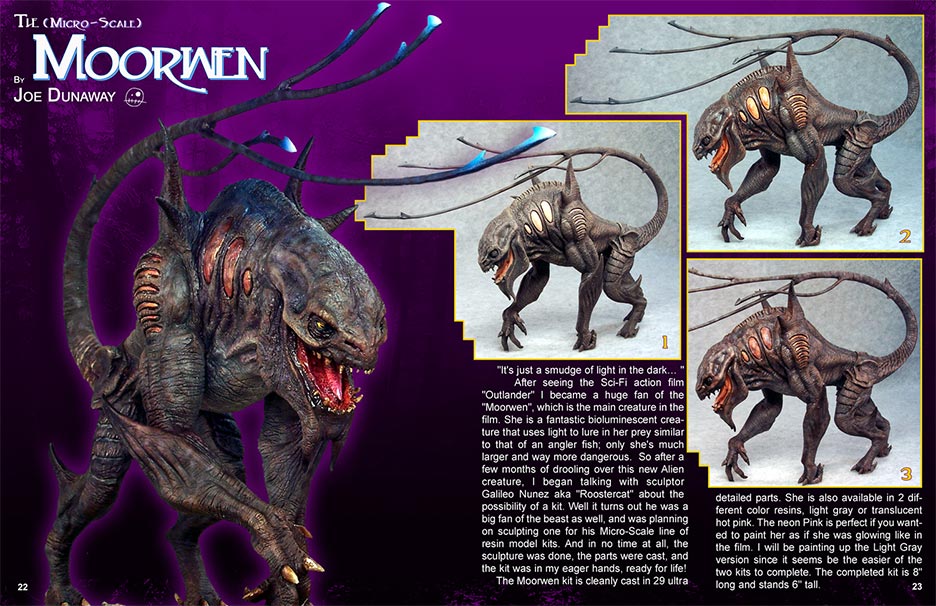
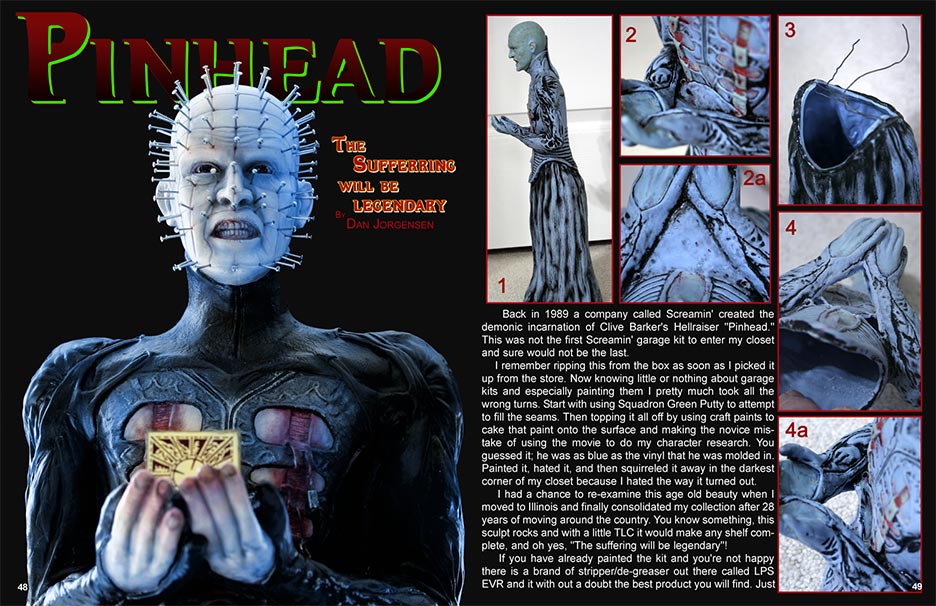
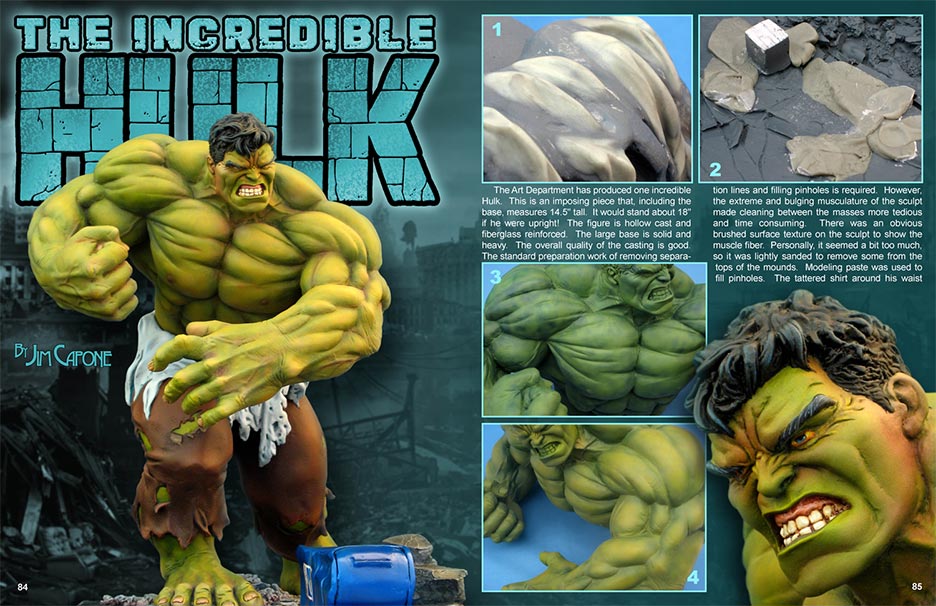
Its contents give a good sense of the magazine's range. Subjects listed on the restored site include an editorial, KB "HotShot," JTMC reviews, Dracula as the Wolf, Moorwen, Gepetto's Nightmare, Markus, El-Faun-O, Pinhead, The Executioner, Werewolf of London, Welcome to Gotham, Swamp Fight, The Incredible Hulk, Anthrosaurus Rex, and Count Dracula.
Even that list illustrates the publication's characteristic mixture of horror, fantasy, monsters, superheroes, and imaginative sculpture.
The site is therefore best understood today as an archive or historical reconstruction rather than the active homepage of a currently publishing magazine. Its value lies in preserving the look, voice, interests, and selected contents of the original publication.
Ownership and the People Behind the Magazine
Historical retail and distributor records consistently identify Gordy's as the publisher of the print magazine, while later official records identify Kitbuilders Magazine, LLC in connection with the publication.
The surviving editorial material also repeatedly refers to Barbara and the editor as the people making publishing and editorial decisions. Later recollections by members of the garage-kit community refer warmly to Dan and Barbara and describe encountering them at ToyMan shows in St. Louis after the magazine had ceased publication.
Those community recollections also indicate a strong St. Louis connection. Hobbyists remembered the pair participating in ToyMan events there, and one contributor recalled Dan continuing to paint models after KitBuilders itself had ended.
The current KitBuildersMagazine.com, however, should not be confused with an active continuation of that original commercial publishing operation. The website identifies itself as a restored archival site created for educational and historical purposes, with selected Issue #64 material forming the heart of the presentation.
Reviews and Reputation Among Hobbyists
Because KitBuilders served a relatively small hobby, it did not accumulate the kind of mainstream press reviews associated with large commercial magazines. Its reputation is instead visible through hobby forums, collectors, convention records, dealer listings, and specialist modeling blogs.
Those surviving comments are revealing.
A collector reviewing Issue #19 praised both its photographs and stories. Another review of Issue #24 called it a great source of model-building ideas. The Bishop Miniatures review emphasized its useful painting and sculpting instruction and recommended it enthusiastically.
Perhaps more telling are retrospective comments from former readers. In a 2016 discussion asking whether Kit Builders was still operating, a hobbyist responded that it was no longer being published. In 2019 another participant recalled the publication as very well produced and noted that advertising had been affordable for kit producers. Contributors also remembered Dan and Barbara personally and expressed regret that the publication had disappeared.
These are not measures of mass-market popularity, but they demonstrate something arguably more meaningful for a niche magazine: sustained affection and recognition among the people for whom it was created.
Cultural and Historical Significance
KitBuilders Magazine preserved a hobby that was unusually dependent on small-scale personal networks.
Garage-kit history can easily disappear. Companies were often tiny operations. Sculptors might produce a limited run and then move on. Kits could vanish after a few dozen or few hundred castings. Businesses closed. Websites disappeared. Photographs were lost. Online forums became inaccessible. The people who knew who sculpted a particular piece or how it was originally sold gradually left the hobby.
Specialist magazines therefore became historical records almost accidentally.
KitBuilders documented artists, products, conventions, techniques, advertisements, controversies, trends, and personalities that might otherwise survive only in scattered collections and personal memories.
Its pages also preserve the aesthetics of late-20th-century genre fandom: the enduring fascination with Universal monsters, Hammer horror, Godzilla, science-fiction cinema, comic characters, elaborate fantasy creatures, and the hands-on satisfaction of transforming a box of unfinished resin pieces into a carefully painted display sculpture.
The magazine's transition to the Internet adds another historical layer. KitBuilders belonged to a generation of specialist publications forced to decide whether expensive print production could survive when readers increasingly expected immediate digital access. The Inter-Mag experiment represents one small hobby publisher's response to that much larger transformation.
The Meaning of the KitBuilders Motto
One line perhaps summarizes the magazine better than any circulation figure or issue list:
"It's your hobby...keep it fun!"
That philosophy runs through the surviving editorial material. KitBuilders existed because its creators believed the hobby deserved support, not simply because publishing it represented a commercial opportunity.
That helps explain its emphasis on sharing techniques, promoting artists, reviewing products, recognizing contest builders, documenting hobby history, and maintaining connections among enthusiasts.
It also explains why KitBuildersMagazine.com remains interesting long after the original magazine stopped appearing.
For a modern visitor, the website is a window into a period when garage-kit builders occupied a small but extraordinarily creative corner of popular culture. They sculpted monsters, rebuilt movie characters, modified commercial kits, constructed elaborate dioramas, debated paint techniques, attended conventions, traded limited-production resin pieces, and learned from one another through publications such as KitBuilders.
The surviving site is consequently more than an archive of an old magazine. It preserves evidence of how a pre-social-media hobby community communicated, taught skills, celebrated artists, discovered new products, and sustained a specialized craft for roughly two decades.
For collectors of garage kits, students of model-making history, horror and science-fiction enthusiasts, and researchers interested in the evolution of niche publishing, KitBuildersMagazine.com provides an unusually specific glimpse into that world.